
Is the Bricklaying NVQ Vocational?
A National Vocational Qualification (NVQ) in Construction is designed for experienced tradespeople who are looking to validate their expertise with a formal qualification. A Bricklaying NVQ, as with any other NVQ, is vocational. This makes it very different from traditional, academic qualifications, which are assessed via exams or coursework.
In today’s blog, we’ll be breaking down the vocational nature of an NVQ in Bricklaying, and outlining all you need to know about the course.
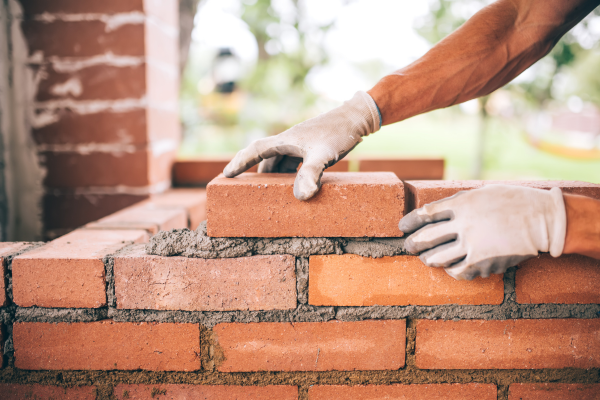
Defining Vocational Qualifications in Construction
In the context of the UK construction sector, a vocational qualification can’t merely be a certificate of attendance or a theoretical test. It must serve as a rigorous validation of operational capability. It’s a formal recognition that an individual possesses the precise skills, safety awareness, and technical dexterity required to execute a job role to industry standards immediately upon qualification.
A construction qualification is genuinely vocational only if its learning outcomes directly translate to the physical realities of the building site.
How the Bricklaying NVQ Fits the Vocational Framework
The NVQ framework was specifically engineered to move away from purely academic testing. When we look at the Bricklaying qualification, which is typically taken at Level 2 for skilled workers and Level 3 for advanced crafts, it aligns perfectly with the core pillars of vocational education.
Contextualised Learning: Assessment occurs entirely within the context of active construction environments rather than simulated classrooms.
Skill Replication: All assessed tasks mimic exact industry requirements, such as building cavity walls, laying blockwork, and installing damp proof courses.
No Arbitrary Timeframes: The qualification is entirely output-based. Candidates pass when they prove competence, not when they hit a specific number of classroom hours.
The NVQ doesn’t ask a candidate to hypothesise how to mix mortar or handle a trowel in a written essay. Instead, it demands that the candidate select the correct aggregate ratio, gauge the consistency for specific weather conditions, and lay bricks to a tolerance of millimetres under the watchful eye of an industry expert. It’s the embodiment of occupational training.
The Role of Practical Learning in Modern Trades
There’s a profound cognitive difference between understanding the physics of a structure and physically manipulating materials to build it. Modern trades rely heavily on tactile and experiential learning, which is often referred to as muscle memory and spatial intelligence.
In brickwork, practical learning is indispensable because of the volatile variables involved on a construction site:
Material Variability: No two batches of bricks or sand are identical. Moisture content alters how mortar behaves, requiring a bricklayer to feel and adjust their mix dynamically.
Environmental Factors: Wind, rain, heat, and frost dramatically affect set times and structural stability, meaning learners must adapt their pacing and techniques daily.
Physical Ergonomics: Developing the physical stamina and joint mechanics to lay hundreds of units a day without injury requires prolonged physical repetition that cannot be simulated.
Traditional classroom environments are fundamentally unequipped to simulate these realities. So, practical learning isn't just a component of the trade; it’s the trade itself.
Balancing Workplace Assessment and the Bricklaying NVQ
One of the most misunderstood aspects of the NVQ is how it balances learning with assessment. The NVQ is not a training programme in the traditional sense; it’s a workplace assessment framework.
This distinction is crucial. While a diploma or college course teaches you how to do something in a controlled environment, the NVQ assesses your ability to do it consistently and safely at work.
Understanding the Hands-On Nature of a Bricklaying NVQ
What does "hands-on" actually look like through the lens of an NVQ assessment? It means your competence is judged by the physical manifestations of your labor.
An NVQ candidate must routinely demonstrate mastery over physical skills, including:
Setting Out: Translating architectural drawings onto the ground using profiles, tapes, and ranging lines to establish perfectly square corners via the 3:4:5 triangle method.
Plumb, Level, and Gauge: Ensuring that every course of brickwork is perfectly vertical, horizontally straight, and matches the correct height metrics.
Jointing and Pointing: Finishing the mortar joints, such as weather-struck, bucket-handle, or recessed, to protect the structure against water ingress.
National Occupational Standards Explained
Every NVQ is underpinned by a rigorous framework known as National Occupational Standards (NOS). These standards are developed by industry bodies, employers, and educational experts to outline exactly what a competent worker should know and do in their daily role.
The NOS acts as a UK-wide blueprint for excellence by dictating:
The precise tasks a bricklayer must be capable of executing on a live project.
The safety benchmarks and environmental protocols they must uphold at all times.
The depth of technical knowledge they must possess regarding materials, structural integrity, and building regulations.
Because the NVQ is mapped completely to the NOS, it ensures total consistency across the country. A Level 2 Bricklaying NVQ achieved in Glasgow signifies the exact same baseline of occupational competency as one achieved in London, making it a highly reliable and universally understood currency within the UK construction sector.
Alignment of the Bricklaying NVQ with Industry Demands
The construction landscape is rapidly changing. Modern building regulations focus heavily on thermal efficiency, structural longevity, and carbon footprint reduction. Consequently, an educational pathway that remains static quickly becomes obsolete.
The NVQ addresses this by maintaining direct alignment with changing industry demands. Modern NVQ criteria don’t just evaluate standard brick-and-block work. They encompass:
Modern Methods of Construction: Working with thin-joint masonry systems and insulated concrete forms.
Thermal Barrier Continuity: Ensuring cavity insulation is fitted seamlessly without air gaps or debris bridges that cause cold bridging.
Complex Detailing: Installing modern damp proof courses, cavity trays, and weep holes correctly to manage moisture in highly insulated buildings.
Competency-Based vs. Knowledge-Based Assessment
To understand why the NVQ is so highly regarded by contractors, it helps to look at the fundamental difference between competency-based and knowledge-based qualification models.
Knowledge-Based Assessment: Focuses on the question of whether you can explain how to construct a decorative arch in a written test.
Competency-Based Assessment: Focuses on whether you can construct a structurally sound decorative arch on a live, commercial site to industry tolerances.
Traditional academic qualifications are almost entirely knowledge-based. They assess what you can remember and articulate on paper. The Bricklaying NVQ, conversely, is competency-based. While you must possess the underlying knowledge to complete a task, the ultimate grade rests on your physical output. If you can explain how to build a cavity wall perfectly but your physical wall fails to meet structural tolerances or safety criteria, you can’t pass the NVQ. This focus on actual output is the defining hallmark of true vocational assessment.
Shifting From Traditional Exams to the Bricklaying NVQ
For many individuals drawn to the manual trades, traditional academic environments can be restrictive. Written examinations often measure a person's exam technique and reading comprehension rather than their actual aptitude for craftsmanship.
The NVQ assessment model removes unnecessary barriers for highly talented, practical individuals who may struggle with formal examinations due to dyslexia, language barriers, or test anxiety. It democratises qualification by focusing strictly on what matters most: the individual's ability to do the job safely and skillfully.

The Structure of Work-Based Diplomas
The NVQ is structured as a work-based diploma, divided into logical, progressive segments. Rather than being assessed on everything all at once, candidates complete specific units that mirror the natural progression of real-world construction projects.
A standard work-based diploma structure includes:
Mandatory Units: Core modules that every single bricklayer must master, regardless of their specific niche, location, or employer.
Optional Units: Specialised modules that allow candidates to tailor their qualification to the specific type of work available on their site, such as decorative brickwork versus heavy engineering masonry.
This modular structure allows candidates to build their qualification step-by-step, ensuring that their learning is organised, thorough, and highly structured despite taking place in a busy, unpredictable workplace.
Core Units and Modules Covered in a Bricklaying NVQ
Let’s look at the actual core units that a candidate must successfully complete:
Conforming to General Health, Safety and Welfare in the Workplace: This unit ensures the candidate can identify workplace hazards, use Personal Protective Equipment correctly, understand risk assessments, and respond appropriately to emergencies.
Conforming to Productive Working Practices in the Workplace: Focused on efficiency, teamwork, communication, and time management. It looks at how well the candidate maintains their workspace and collaborates with other trades.
Moving, Handling and Storing Resources in the Workplace: Bricklaying involves moving metric tons of materials over the course of a project. This unit covers safe manual handling techniques, mechanical lifting aids, and the correct storage of bricks, blocks, and cement to prevent spoilage.
Erecting Masonry Structures in the Workplace: The core technical module. Candidates must prove competency in building straight walls, return corners, and cavity walls using both bricks and blocks, ensuring structural integrity and precise alignment.
Conclusion: Is the Bricklaying NVQ Vocational?
The Bricklaying NVQ is a completely vocational qualification. In fact, it stands as one of the best examples of vocational education within the modern British workforce. It avoids abstract, academic testing in favor of practical, real-world competence. It treats the active, busy construction site as both the classroom and the examination hall, ensuring that a pass mark is only awarded when a candidate can build safely, accurately, and efficiently.